Eastern Hillsides Homes for Sale in Chilliwack, BC
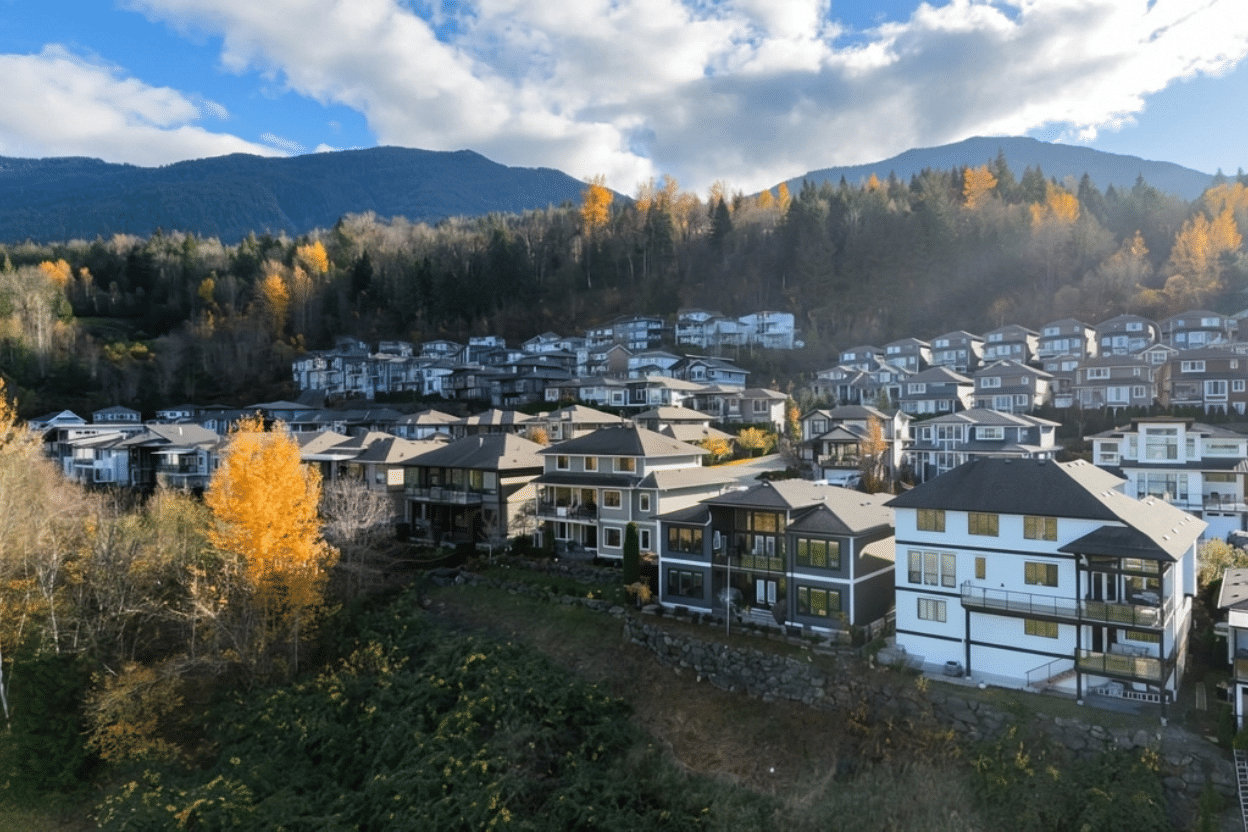
Eastern Hillsides is a scenic residential neighbourhood on the eastern edge of Chilliwack, BC, known for its newer homes, elevated hillside settings and mountain views. The area offers a mix of detached houses, townhomes and newer residential developments, with popular communities including Elk Creek Estates, Ledgestone, Emerald Ridge and The Cliffs. Surrounded by forested areas and natural landscapes, Eastern Hillsides offers a quieter suburban setting while remaining a short drive from Chilliwack’s shopping, schools and everyday amenities.
Eastern Hillsides | All listings updated daily
Explore Eastern Hillsides MLS® listings below. Questions or want to book a viewing? Contact Dustin Fairhurst anytime.
Dustin Fairhurst | Royal LePage Little Oak Realty
778-898-5890
Eastern Hillside listings statistics
See which Eastern Hillside homes for sale are currently the most popular, most expensive & least expensive homes for sale in the area.


Popular Eastern Hillsides Communities
Discover Eastern Hillsides in Chilliwack
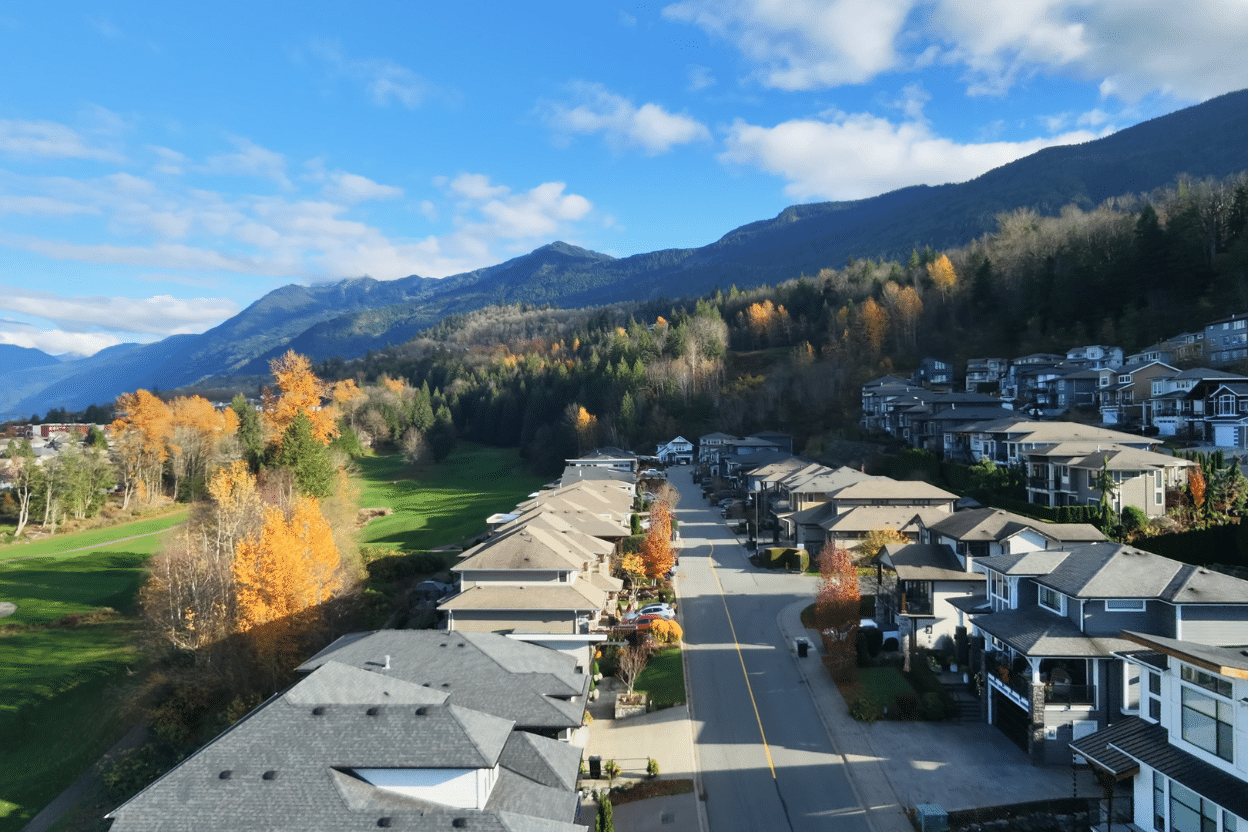
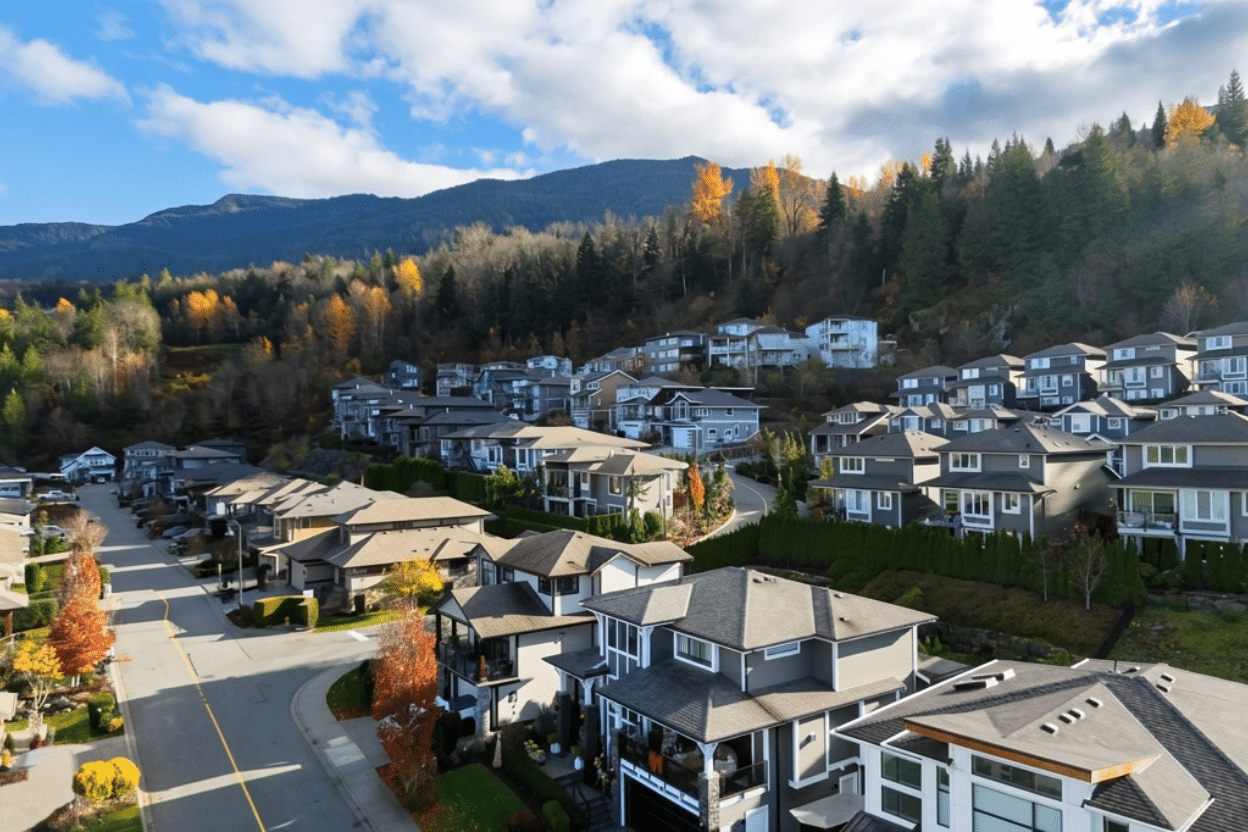
Eastern Hillsides is a residential neighbourhood in the southeastern corner of Chilliwack, British Columbia. Situated above the valley floor, this hillside community offers a different setting from the established neighbourhoods closer to downtown. Instead of flat streets and closely spaced subdivisions, you'll find winding roads, elevated homes, forested surroundings and residential developments built into the natural landscape.
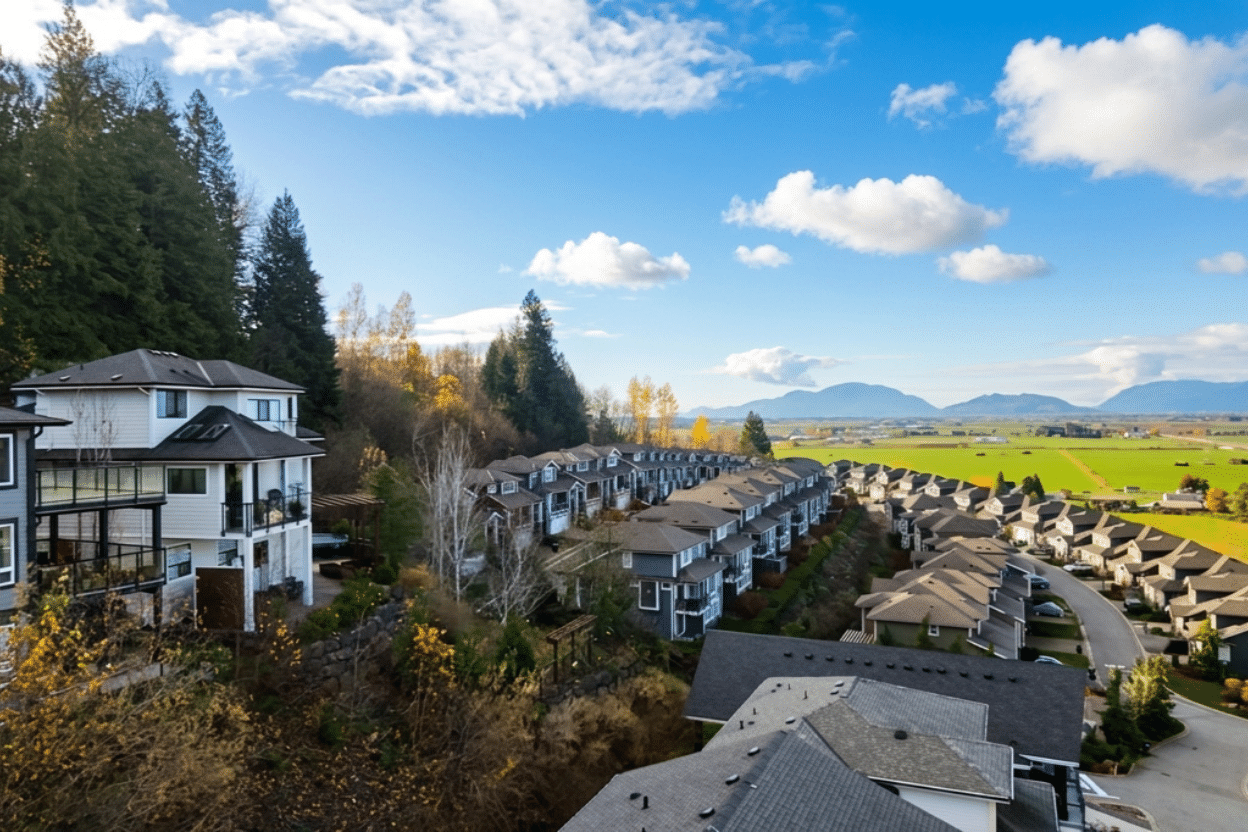
The neighbourhood sits approximately 8 kilometres from downtown Chilliwack and forms part of the northern slopes of the Cascade Mountains. Its position provides a natural transition between the Chilliwack River Valley to the south and the agricultural lowlands of the Fraser Valley to the north.
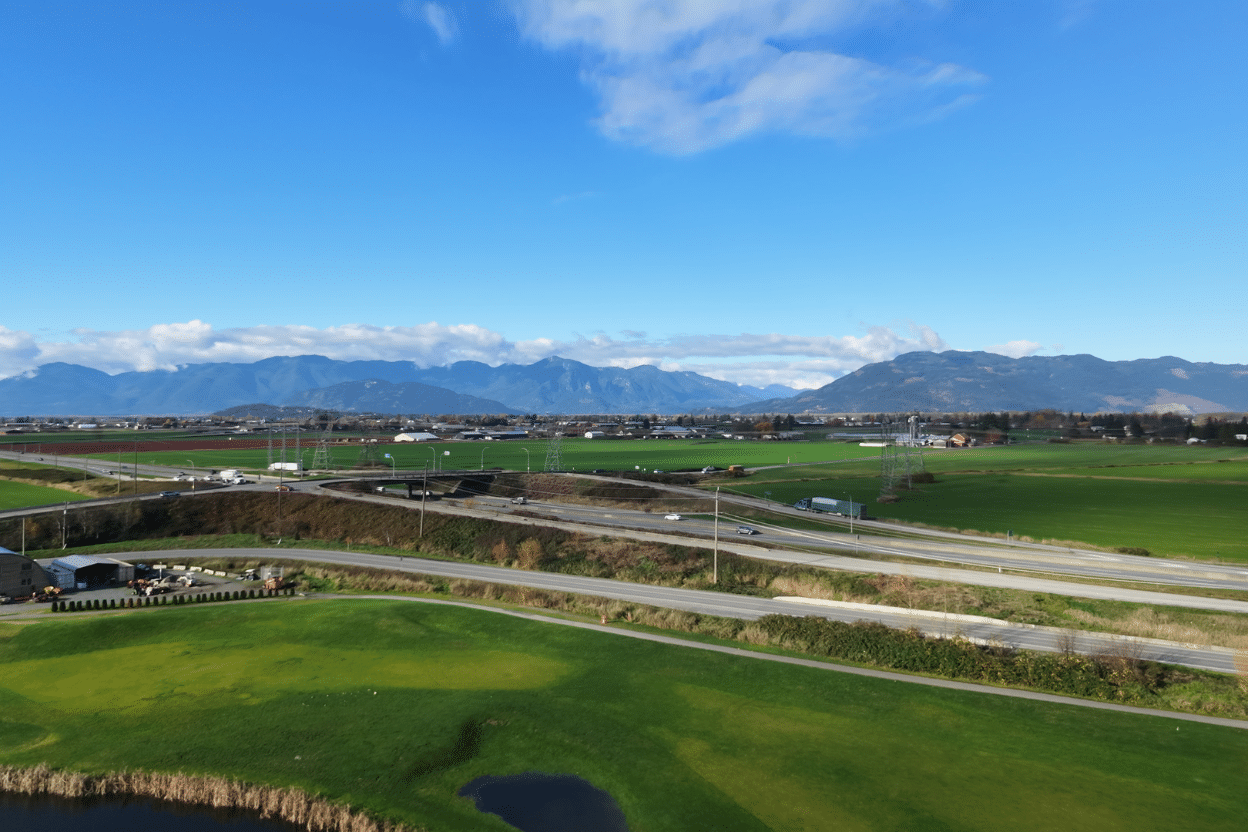
Eastern Hillsides is bordered by the Ryder Lake uplands to the west, Lookout Ridge and Elk Mountain to the south, the Cascade foothills to the east and the Trans-Canada Highway and valley farmland to the north. Its location gives residents a feeling of being removed from the busier parts of the city without having to leave Chilliwack.
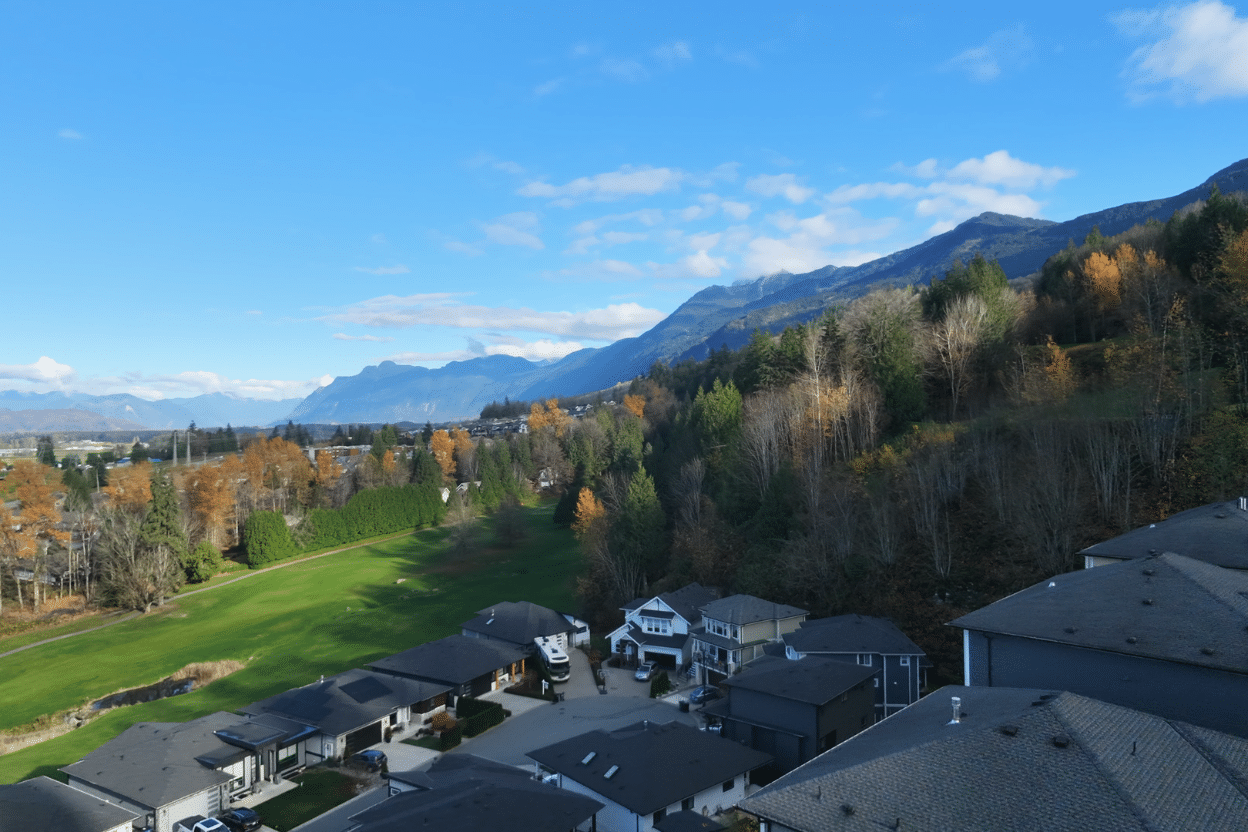
One of the defining features of the neighbourhood is its natural setting. Forested slopes, ravines, creeks and changing elevations are part of the landscape. The area includes the Chilliwack Community Forest, Lexw Qwò:m Park and The Falls Golf Course, providing a mix of residential development and outdoor surroundings.
Unlike a traditional town centre, Eastern Hillsides is made up of individual residential subdivisions and clusters of cul-de-sacs. Different developments have their own layouts, architectural styles and property characteristics. Some homes sit on larger lots with considerable separation from neighbouring properties, while newer subdivisions offer more conventional suburban layouts.
For someone considering a move here, the biggest attraction is often the combination of newer homes, a quieter residential environment and a setting surrounded by nature. The trade-off is that most everyday errands require a drive into another part of Chilliwack.
Eastern Hillsides is particularly worth exploring if you are looking for a detached home, additional living space, an elevated property or a neighbourhood that feels less like a typical urban subdivision.
Eastern Hillsides Population and Growth
Eastern Hillsides has experienced considerable growth over the past decade. According to the City of Chilliwack's 2024 neighbourhood profile, using 2021 Census data, the population increased from approximately 1,310 residents in 2011 to 3,450 in 2021. That's an increase of approximately 163%, making Eastern Hillsides one of Chilliwack's fastest-growing neighbourhoods during that period.
Eastern Hillsides population history
| Year | Population |
|---|---|
| 2011 | 1,310 |
| 2016 | 1,410* |
| 2021 | 3,450 |
*The City notes that the 2016 figure may reflect differences in how census areas were allocated. The 2011 and 2021 figures are considered more representative of the neighbourhood's growth.
A neighbourhood with a relatively young population
The 2021 neighbourhood profile reported a median age of 38.8 years, compared with 40.8 years across Chilliwack as a whole. Approximately 30% of Eastern Hillsides residents were under 20 years old, while 44% were between 35 and 64.
These figures suggest a neighbourhood with a substantial number of families and established working-age households. Couples with children represented 39% of households in 2021, while couples without children accounted for another 32%.
Homeownership and household growth
The number of households increased from 415 in 2011 to 1,025 in 2021, representing approximately 147% growth. Homeownership was also high, with 87% of households reporting that they owned their homes in 2021, compared with 13% who rented.
What does this growth mean?
Population growth helps explain why Eastern Hillsides has become an increasingly important residential area for Chilliwack. More households create demand for housing, transportation, schools, parks and other community services.
However, growth on a hillside is different from growth on flat land. Roads, water infrastructure, drainage, environmental protection and geotechnical requirements all influence how and where additional homes can be built.
It's also important to distinguish historical growth from future projections. The 3,450 population figure is from the 2021 Census-based neighbourhood profile, not a current 2026 population count.
Eastern Hillsides Geography, Geology and Terrain
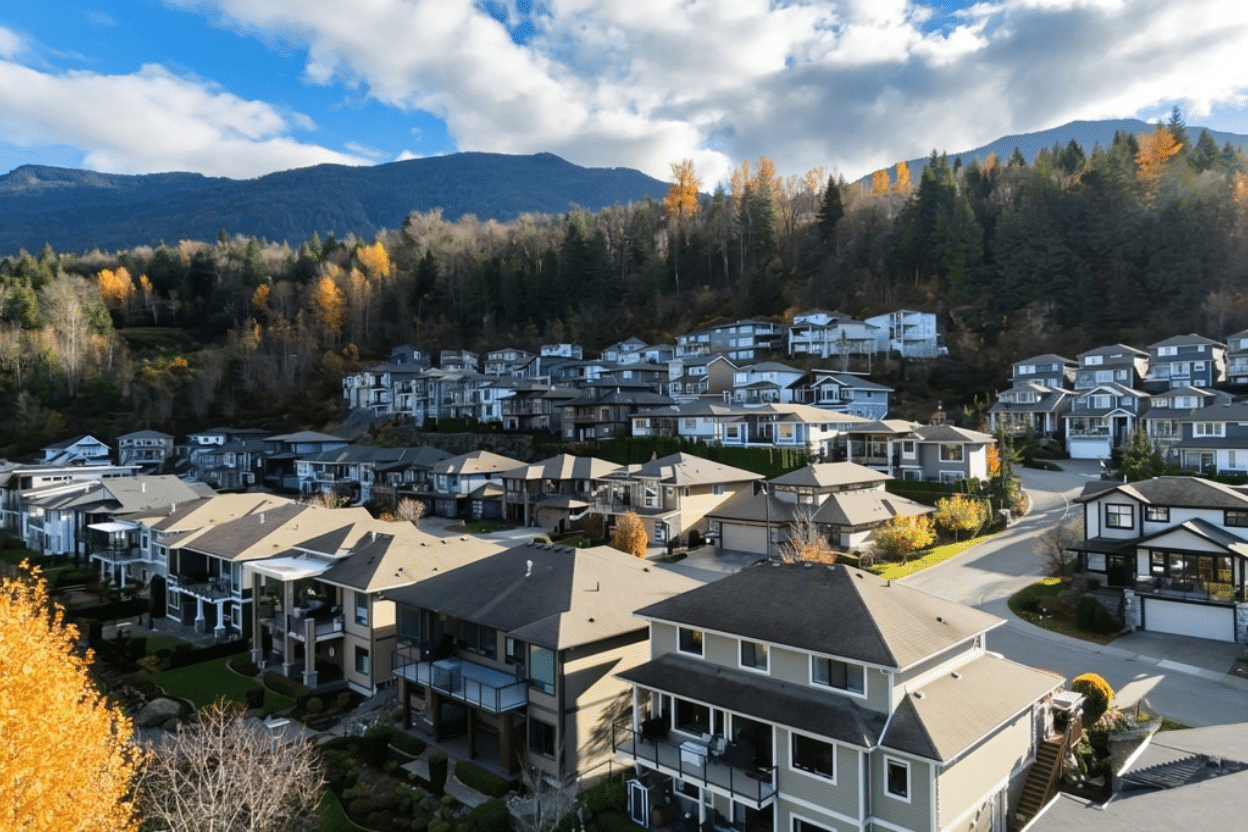
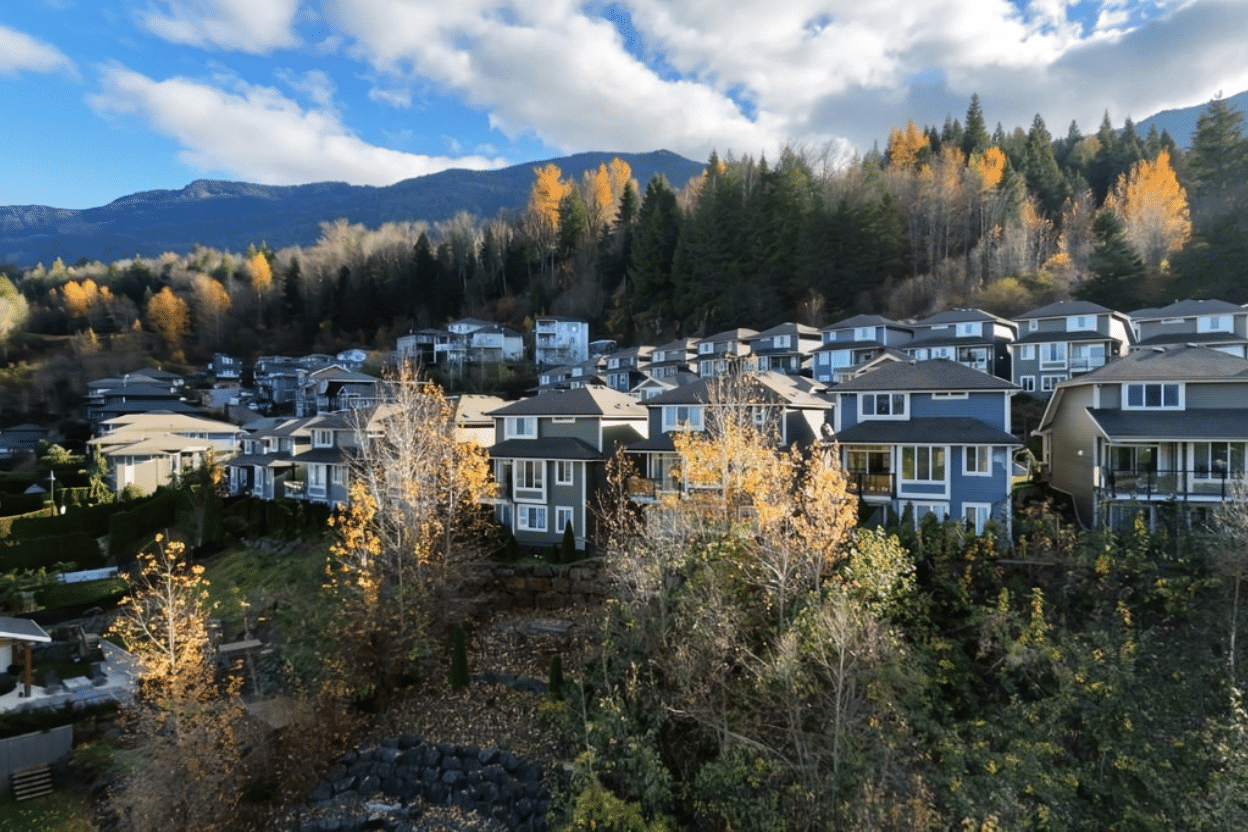
The landscape is one of the biggest reasons Eastern Hillsides looks and feels different from many other Chilliwack neighbourhoods. Rather than being built across the relatively flat valley floor, residential developments here follow the natural contours of the Cascade foothills. Elevation changes, forested slopes, ravines and drainage channels all play a role in how the community has developed.
A landscape shaped by the Cascade foothills
Eastern Hillsides occupies part of the northern slopes of the Cascades, overlooking the agricultural lowlands of the Fraser Valley. The terrain includes a combination of elevated benches, steeper hillsides, natural drainage corridors and forested areas.
The City of Chilliwack's neighbourhood plan identifies five main watercourses, associated ravines and substantial forest cover throughout the planning area. These natural features are important considerations when deciding where residential development can take place.
Why the geology matters to homeowners
Building on a hillside involves different considerations than building on flat ground. Slope angle, soil conditions, underlying materials, groundwater, surface drainage and the way land has been altered can all affect how a particular property is designed and developed.
The City's Eastern Hillsides planning documents identify potential geological concerns including rockfall, landslides and earthflows in areas with unstable conditions. Approximately 45% of the original neighbourhood planning area was identified as having slopes exceeding 30%. This does not mean that 45% of existing homes are unsafe. It illustrates why development has to be carefully directed and assessed.
Development Permit Area 2 (DPA2)
Eastern Hillsides is included in the City's Development Permit Area 2, which addresses hillside environmental conditions. Depending on the property and proposed work, development permits and supporting professional reports may be required before subdivision, construction, land clearing or earthworks.
Geotechnical assessments can examine slope stability, soil conditions, drainage, setbacks and the effects of proposed excavation or fill. Environmental assessments may also be required where streams, wildlife habitat or other sensitive features are involved.
What buyers should investigate
When purchasing a home in Eastern Hillsides, it is worth looking beyond the house itself. The property's elevation, retaining walls, drainage systems, surrounding slopes and any applicable development permit conditions can all be relevant.
Buyers should review available geotechnical reports, title registrations, permits and relevant property disclosures with the appropriate professionals. A report prepared for a neighbouring property should never be assumed to apply to the home being purchased.
The natural terrain is part of what makes Eastern Hillsides appealing, but it also means that every property deserves to be considered individually.
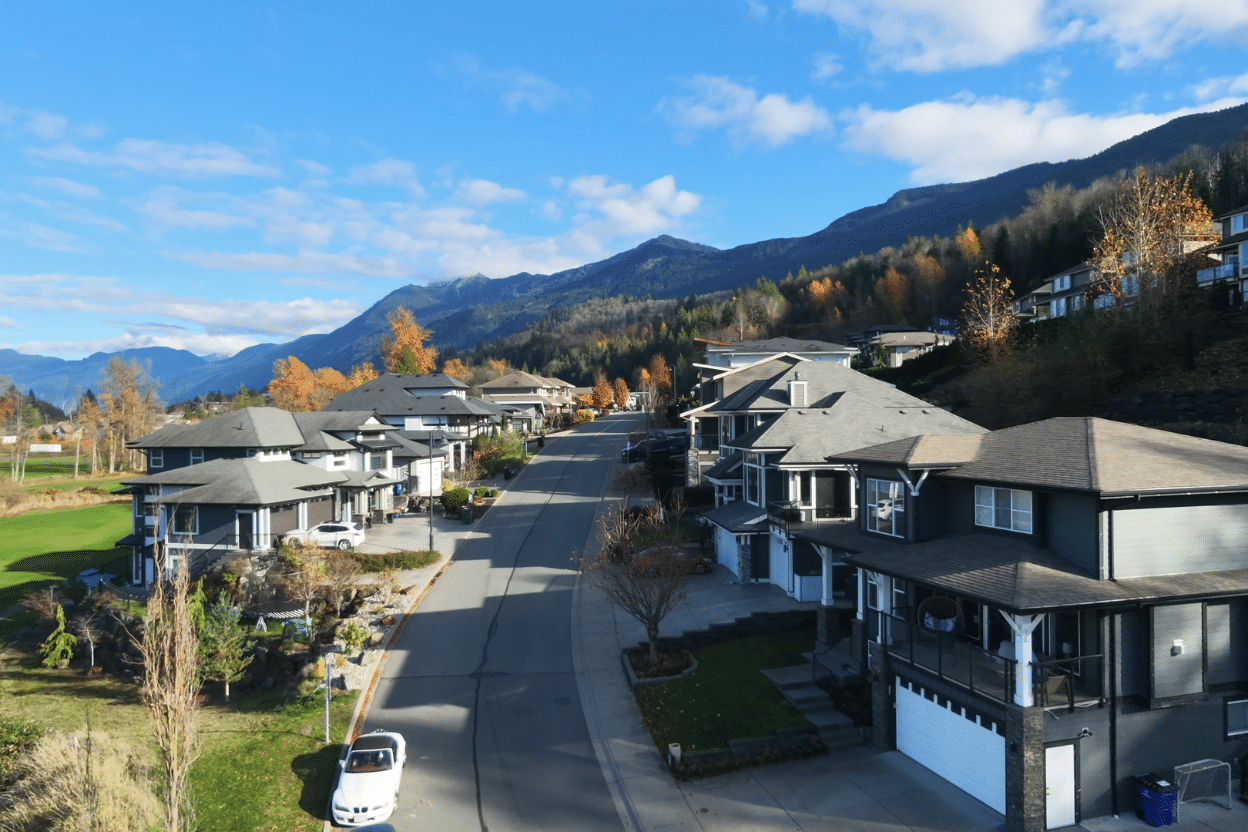
Types of Homes in Eastern Hillsides
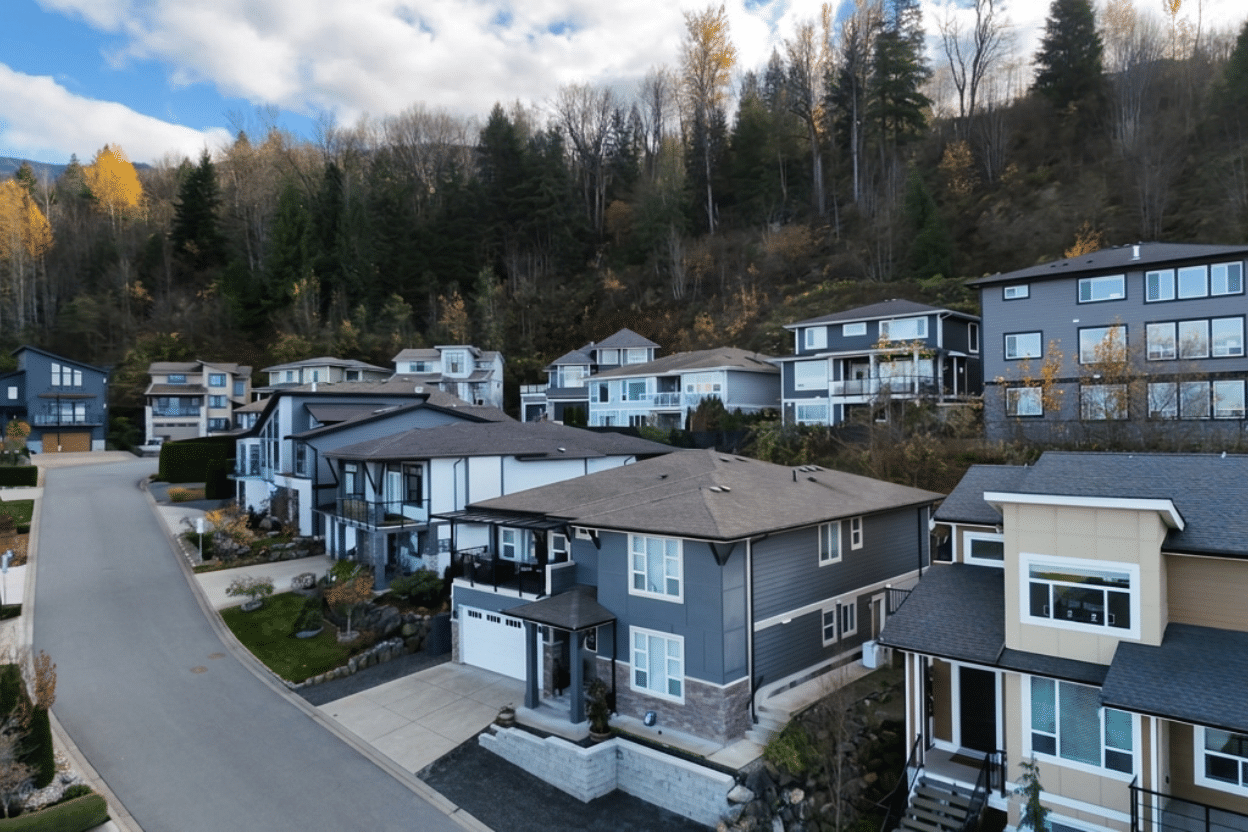
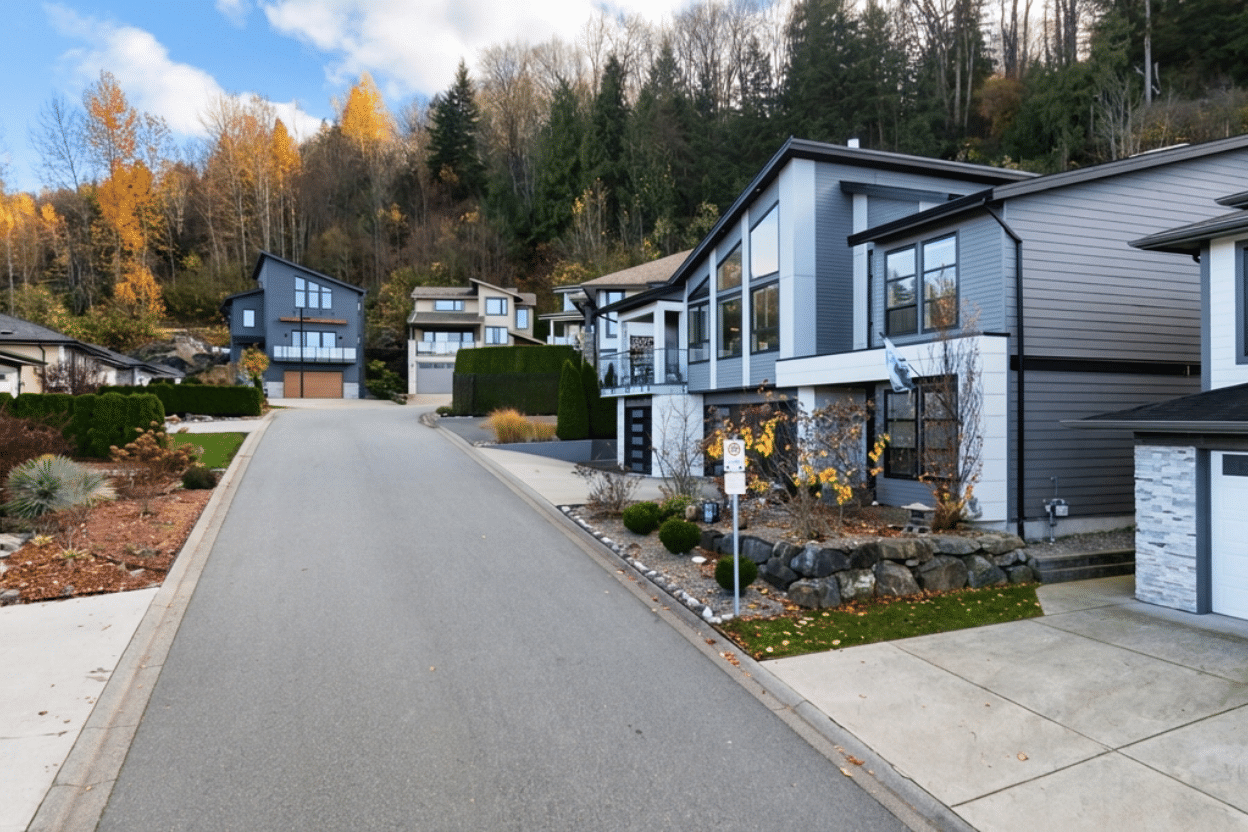
Eastern Hillsides is predominantly a detached-home neighbourhood, with residential developments offering a variety of architectural styles, lot sizes and layouts. Many properties feature multiple levels, larger living areas, attached garages and outdoor spaces designed to take advantage of the hillside setting.
Single-family detached homes
Detached houses make up the largest share of the neighbourhood's housing stock. You'll find modern two-storey homes, multi-level designs, larger executive-style properties and homes with walkout basements. Depending on the location, properties may offer elevated patios, covered decks, landscaped yards and views across the surrounding valley or forested hillsides.
Some developments have relatively conventional suburban lots, while others offer larger parcels and more separation between homes. The layout and usable outdoor space can vary considerably because of the natural slope.
Townhouses and attached homes
Although detached homes dominate, Eastern Hillsides also has townhouse and attached-home developments. These properties provide an alternative for buyers who want to live in the neighbourhood without purchasing a larger detached house.
Townhouse developments may offer shared maintenance arrangements and strata ownership. Buyers should review the applicable strata documents, bylaws, insurance, contingency reserve fund and monthly fees before making a purchase.
Homes with suites and additional living space
Some detached properties have secondary suites, basement living areas or layouts that may accommodate extended family. These features can be attractive to multi-generational households or buyers looking for additional flexibility.
However, buyers should confirm whether a suite is legally authorized and whether its construction complies with applicable building, zoning and fire-safety requirements. A separate entrance alone does not establish that a suite is legal.
Newer subdivisions and established properties
Much of the neighbourhood's modern suburban development took place after 2000. This means buyers can find relatively newer construction alongside homes that have been established for longer periods.
Newer developments may feature contemporary floor plans, open-concept kitchens, larger garages and modern exterior finishes. Older homes can offer mature landscaping, established yards and different lot configurations.
What makes Eastern Hillsides housing different?
One important consideration is that two homes with similar square footage can have very different property characteristics. A sloped lot may have a smaller usable backyard, while another property may have a large level outdoor area. Views, sun exposure, driveway grades, retaining walls and access can all influence value and buyer appeal.
For buyers comparing properties, it is worth looking at the complete package rather than simply comparing the number of bedrooms or the finished square footage.
Shopping, Restaurants and Amenities Near Eastern Hillsides
Eastern Hillsides offers a quieter residential setting, but it isn't a traditional walkable shopping neighbourhood. Residents generally drive down the hill to access grocery stores, restaurants, retail shops and everyday services in other parts of Chilliwack.
Grocery shopping and everyday errands
Rosedale is one of the nearby communities where residents can access smaller local shopping options, including Rosedale Grocery along Yale Road. For a larger selection of groceries and everyday necessities, downtown Chilliwack and the commercial areas closer to the Trans-Canada Highway provide additional choices.
Depending on where you live in Eastern Hillsides, shopping trips can include stores along Yale Road, downtown Chilliwack or the larger retail centres around Luckakuck Way and Eagle Landing.
Retail and larger shopping centres
Residents have access to several established shopping areas within Chilliwack, including the Luckakuck commercial area and Eagle Landing. These areas offer a wider selection of grocery stores, department stores, restaurants, specialty retailers and services.
The practical advantage is that residents can enjoy a quieter home environment while still having access to the shopping and services available throughout the city.
Restaurants and dining
There are dining options in Chilliwack and nearby Rosedale, although Eastern Hillsides itself has a limited selection of commercial restaurants. Most residents will drive to other parts of the city when meeting friends for dinner, grabbing takeout or visiting a coffee shop.
Outdoor recreation
One of the area's best-known recreational features is The Falls Golf Course, a golf destination built into the surrounding hillside landscape. The Chilliwack Community Forest and Lexw Qwò:m Park also contribute to the area's natural character and outdoor recreation opportunities.
It's worth remembering that private recreational facilities and public parks are not the same thing. Access, opening arrangements and available facilities should be checked individually.
Is Eastern Hillsides convenient for everyday living?
For buyers who are comfortable driving for groceries, appointments and shopping, the location offers access to Chilliwack's wider range of amenities. Those who prefer to walk to shops, restaurants and services may find the neighbourhood less convenient.
That trade-off is worth considering when deciding whether Eastern Hillsides is the right fit for your lifestyle.
Transportation and Commuting from Eastern Hillsides
Eastern Hillsides is primarily a vehicle-oriented neighbourhood. Its elevated location, winding residential roads and distance from major shopping areas mean that most residents rely on a car for everyday transportation. The neighbourhood does, however, have road connections to downtown Chilliwack, the Trans-Canada Highway and surrounding Fraser Valley communities.
Access to Highway 1
The Trans-Canada Highway runs along the northern edge of Eastern Hillsides, providing access to the wider Fraser Valley and the Lower Mainland. Residents can connect to Highway 1 through the Annis Road interchange and the surrounding road network.
For commuters travelling west toward Abbotsford, Langley and Metro Vancouver, Highway 1 provides the primary regional route. Travelling east connects residents toward Hope and the communities beyond Chilliwack.
Getting around Chilliwack
Road connections also make it possible to travel into downtown Chilliwack, Rosedale and other residential and commercial areas. Shopping, medical appointments, recreation and most everyday errands generally involve driving down from the hillside.
Actual travel times depend on the specific subdivision, traffic conditions and destination. A home near the lower portion of the neighbourhood may have a different commute from one situated farther up the hillside.
Public transportation
Chilliwack is served by BC Transit, including local routes and the Fraser Valley Express regional service. However, Eastern Hillsides has historically had very limited transit use. The City's 2021 neighbourhood profile reported that approximately 96% of residents commuting to work travelled by car, while only 1% used public transit.
That figure describes commuting patterns at the time of the 2021 Census, rather than confirming the current availability or frequency of individual bus routes. Buyers who rely on transit should check the latest BC Transit route map and schedules for their specific address.
Walking and cycling
The hillside setting presents some challenges for people who prefer to walk or cycle for everyday transportation. Steeper grades, distances between residential subdivisions and limited connections to commercial destinations mean that the neighbourhood is not particularly suited to car-free living.
The City's Active Transportation Plan recognizes the challenges of providing pedestrian and cycling infrastructure in hillside communities, including Eastern Hillsides. Road gradients and available space can influence where sidewalks, cycling routes and other improvements are practical.
What commuters should consider
Eastern Hillsides can be an appealing option for people who work from home, commute by car or don't mind driving to access everyday services. Before purchasing, it is worth testing the actual route to work during your normal commuting hours rather than relying on estimated travel times alone.